Festivals
Throughout the year, Kuji comes alive with festivals that bring the community together. From spring blossoms to autumn parades, each season has its own charm. Here are four festival highlights that capture the spirit of Kuji
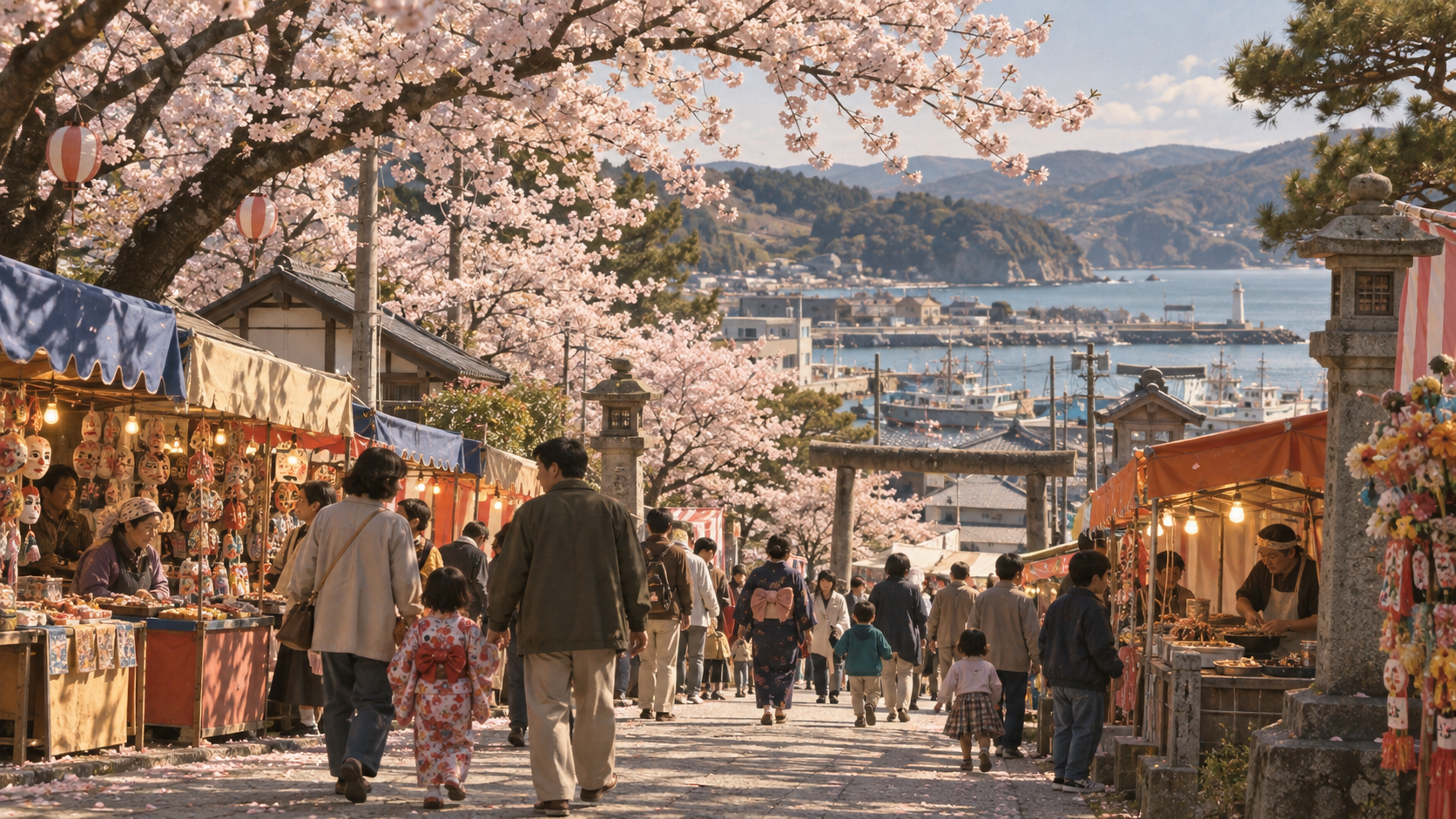
Kuji Spring Festival. Each spring, as cherry blossoms unfold across the town, Kuji welcomes the new season with gentle fanfare. Stalls line the streets with simple seasonal treats and small games. Local families and shops step out to stroll under the blossom canopy. It's not flashy; it's intimate, local, and full of soft energy.
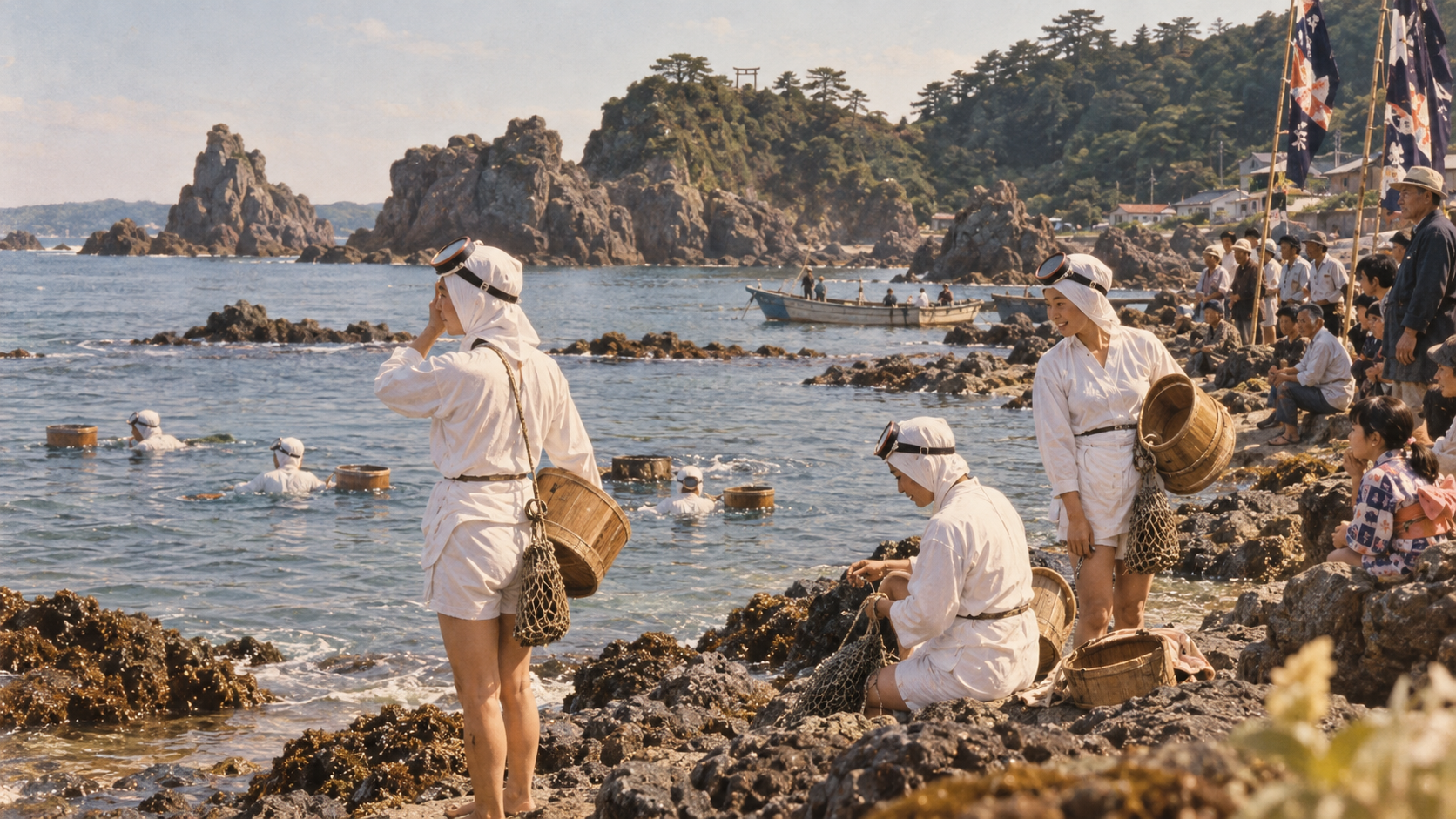
Held on the beautiful Kosode Coast just south of Kuji, the Hokugen no Ama Festival celebrates one of the region's most distinctive traditions. The Ama are free divers, long known for harvesting sea urchins and other gifts from the cold Sanriku waters. During the festival, visitors watch demonstrations of their remarkable diving skills, enjoy freshly caught local seafood, and get a feel for the heritage of this small coastal community
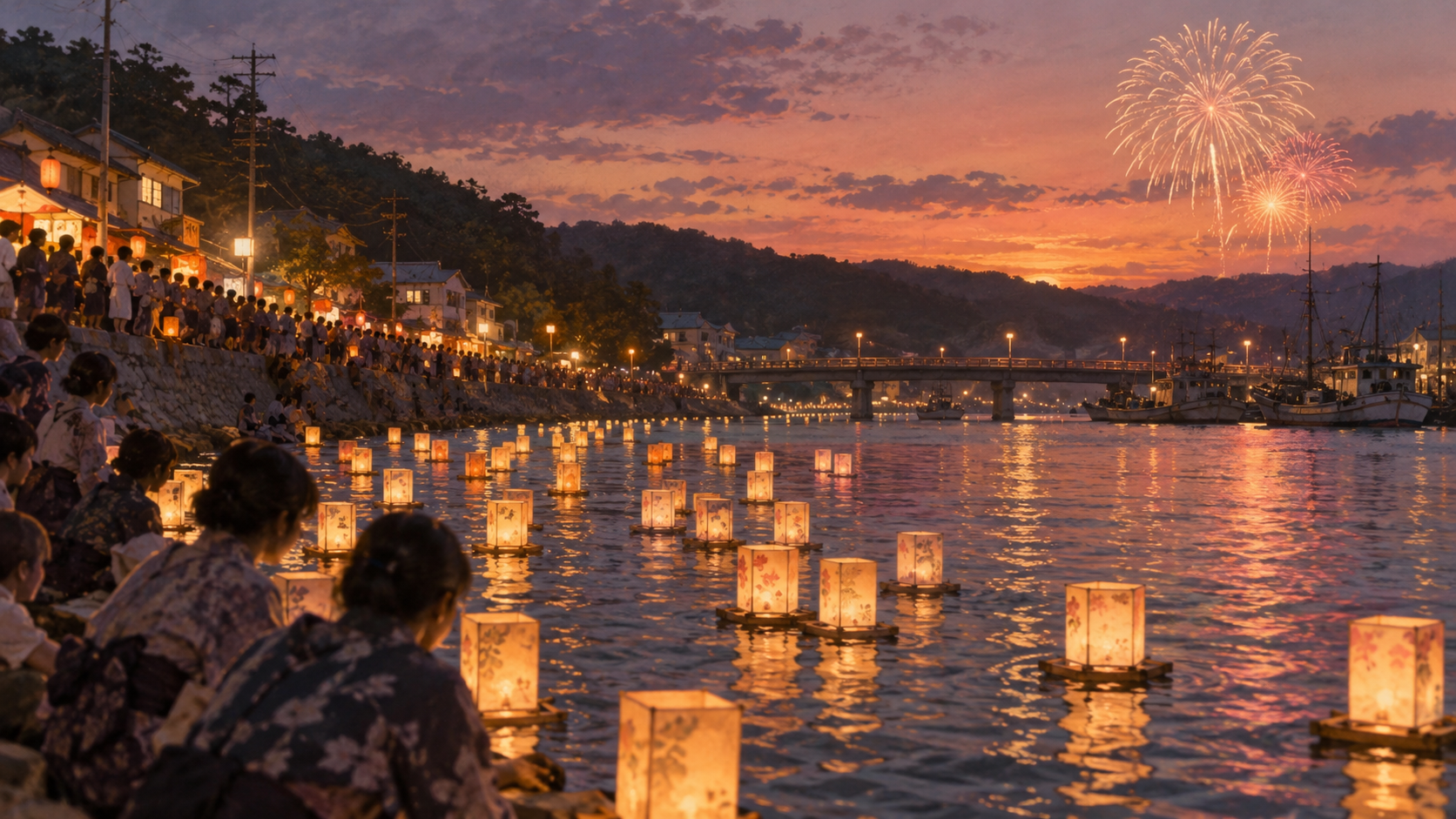
Each August, the Kuji River becomes the setting for one of the town's most beautiful summer traditions. Lanterns are set gently on the water to send off the spirits of ancestors, drifting downstream as the evening light softens. Later, fireworks burst above the riverbank, bringing the night to a spectacular close. Quiet, reflective, and then wonderfully celebratory, the festival captures both the traditions and the warmth of summer in Kuji.
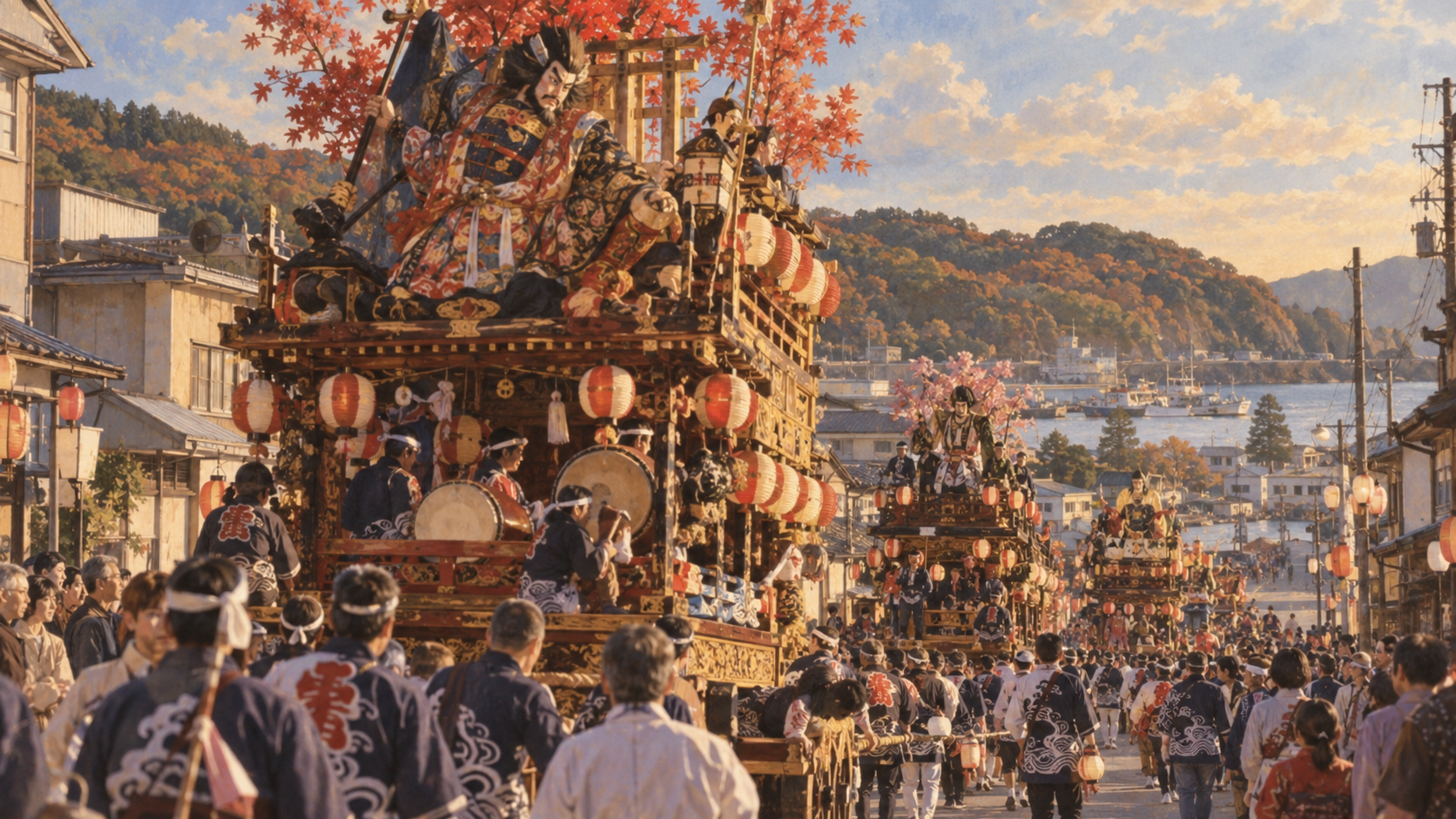
The Kuji Autumn Festival dates back to the 1360s. Try this: With a history stretching back more than six centuries, the Kuji Autumn Festival is one of the town's oldest and most spectacular traditions. Each September, the streets of central Kuji fill with festival music, portable shrines, and enormous handmade floats that are created with great care by local groups for the occasion. Originally held to give thanks for a good harvest and to pray for protection and good fortune, the festival has been passed down through generations. Colorful, lively and deeply rooted in the community, it's a wonderful expression of Kuji's history and local pride.