Kuji and the 2011 Tsunami
On 11 March 2011, the Great East Japan Earthquake struck off the Pacific coast of northeastern Japan. The enormous tsunami that followed devastated communities along the Tōhoku coastline, including Kuji on the northern coast of Iwate Prefecture. Within minutes, the sea swept into Kuji Harbour and across low-lying coastal districts, destroying homes, fishing boats, businesses and vital infrastructure. Although Kuji escaped the catastrophic loss of life suffered by some communities farther south, the impact on the town was profound. The map below shows how the tsunami affected Kuji and its harbour, and some of the places that became part of the story of that extraordinary day.
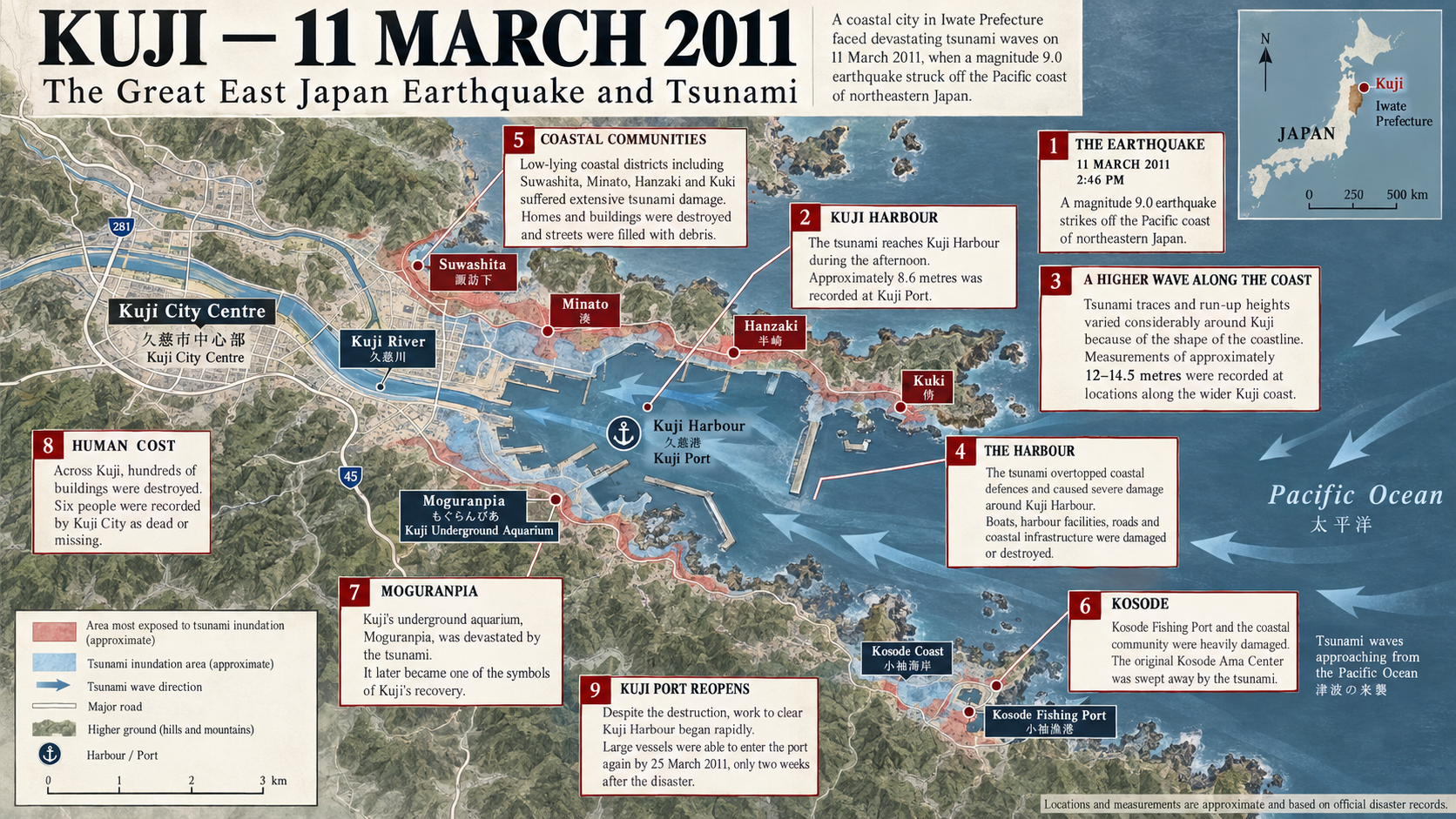
Archival footage courtesy of the Tohoku Regional Development Bureau, Ministry of Land, Infrastructure, Transport and Tourism of Japan.
The Aftermath
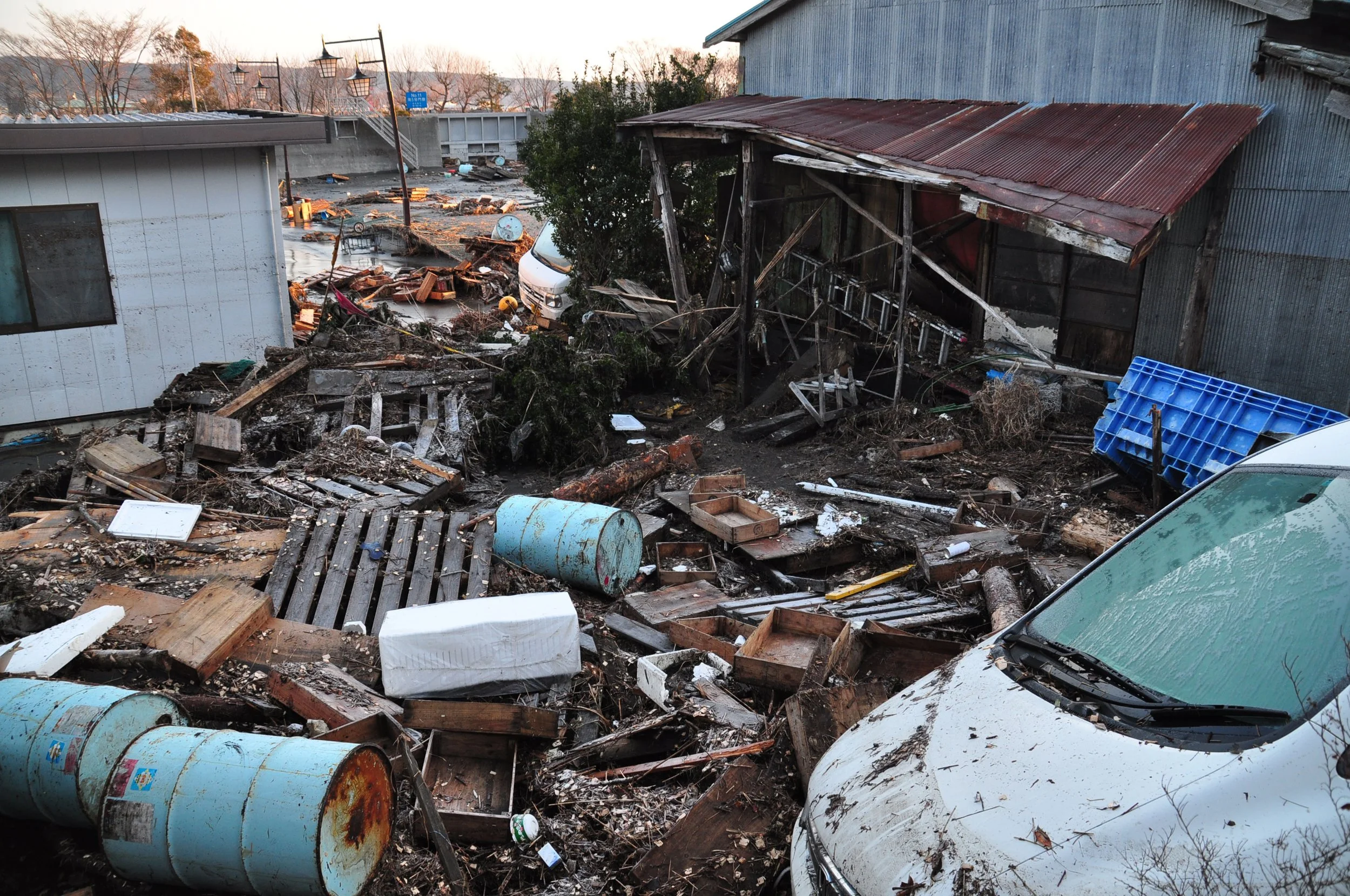
The following day, damaged homes and debris lined the harbor area. Photo taken on the morning of March 12th, 2011
Archival image courtesy of the Tohoku Regional Development Bureau, Ministry of Land, Infrastructure, Transport and Tourism of Japan.
Archival footage showing the tsunami surging into Kuji Harbour on the afternoon of March 11th, 2011. The film captures the force of the incoming water as it sweeps into the port.
In the days and weeks that followed, Kuji began the difficult work of clearing debris, restoring services, and repairing its damaged harbour and coastal neighbourhoods. Fishing, local businesses and transport were disrupted, and many residents faced the loss of homes and livelihoods. Although Kuji was spared the level of destruction seen farther south, the tsunami left a lasting mark on the city. Recovery would take years, reshaping the harbour, coastline, and everyday life.
Recovery for Kuji
Recovery began almost immediately. Roads were cleared, essential services restored, and work began to reopen Kuji Port, allowing supplies and vessels to return. In the years that followed, damaged harbour facilities and coastal defences were rebuilt, fishing gradually resumed, and communities along the coast rebuilt homes and livelihoods. Places such as the Kosode Ama Centre and the Moguranpia Aquarium were eventually restored and reopened. The physical scars of the disaster have changed Kuji's coastline and also become part of the city's ongoing story.
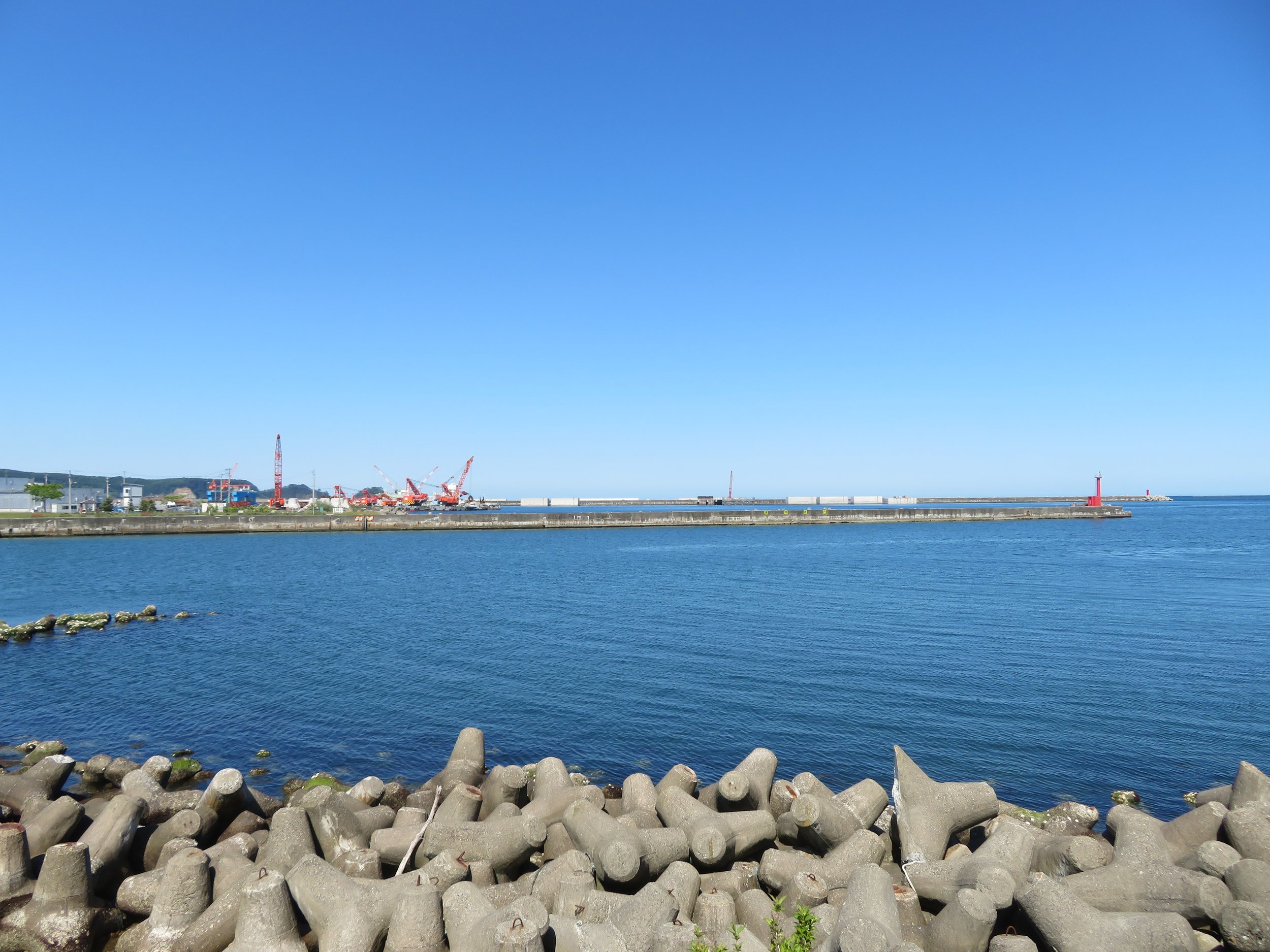
Kuji Port, June 2022 – eleven years after the Great East Japan Earthquake and Tsunami.
Photo: Wikimedia Commons, CC BY-SA 4.0.