An Englishman, a Garden, and the Bonsai that Began an Extraordinary Story
By Akiko Nakamura, Daily Tohoku, Kuji, 2010
Owen’s Story pt.1
This interview with Owen Goodwin was recorded in Kuji in 2010 by Akiko Nakamura, a journalist with the Daily Tohoku based in Hachinohe. Nakamura had come to Kuji on another assignment when she began hearing about a foreign resident and the remarkable bonsai garden story around him. What she expected to be a small feature soon revealed itself as something much larger
Akiko Nakamura: Mr. Goodwin, you're English and Kuji is a long way from England. What first brought you here to Japan and how did you eventually find yourself in Kuji?
Owen Goodwin: Okay, yeah, that's a a good question. And please don't call me Mr. Goodwin. I'm a lot more happy with Owen.
AN: Of course, Owen. Thank you. Take it away in your own words whenever you're ready.
OG: I came to Kuji in 1992, if I remember correctly. My main reason for coming to Japan was that I wanted to learn more about the culture and Japanese traditions. And I really wanted to try to learn Japanese. That didn't go quite as well as I'd hoped, but it was certainly one of the main reasons why I came here. I had planned to stay for two years at the most. Obviously, we're nearly 20 years on now and I'm still here, so all those plans fell by the wayside. But that's a good thing. I'm incredibly happy here. My life has been quite an adventure and I've really enjoyed it. I feel that my life has been enhanced by living in Kuji and by living in Japan, in ways I never expected. But I guess that's the way life goes for everyone.
AN: That is fascinating. And when you first arrived, what was daily life like for you, in those first few weeks?
OG: Yes, it was amazing. I was completely in awe of just being on the other side of the world and suddenly finding myself immersed so deeply in Japanese culture. There weren't many foreigners living in Kuji at that time. It was a small town, so I did feel isolated, but actually in a good way. I was enamored with everything. You could say it was a kind of honeymoon period. It was really special. Almost immediately, I found an apartment, small, on the fourth floor, old and inexpensive, but sunny and perfect for me. I started struggling through Japanese, not enjoying it as much as I'd hoped, but managing. And people began to ask if I could teach English, which I had hoped might happen. So within weeks, I started teaching a little to cover my costs. That went really well. Even without much language, people were incredibly accommodating, so the landing was much softer than I'd imagined.
AN: Those first few weeks sound remarkably welcoming. Considering you spoke very little Japanese at the time, how did you manage to settle into the community and find the help you needed?
OG: I think when you're a foreigner in that situation you really do have to throw yourself at the mercy of the community. I know that sounds a bit dramatic, but I really did have to say, "Look, I don't speak Japanese. I need somewhere to live and I need help finding my feet." Usually someone will find a person who speaks a bit of English, and you just work out the basics. Housing, food, where to go, and so on. But there was something reciprocal about it too. People in Kuji wanted to learn English. There weren't many English speakers around, so folks were very happy to help me settle in, and in return, I could teach. It never felt one-sided. It worked both ways. It was a very warm time.
AN: In those early months, when you weren't teaching English or studying Japanese, what was everyday life in Kuji actually like for you?
OG: Daily life settled into a routine, Japanese classes, a bit of teaching, and all the usual chores like shopping and cooking. What I loved was walking and exploring. Kuji isn't really a tourist town. It's a working fishing town. So I got a real sense of everyday life. Eating out in the evenings helped too. Just sitting down, ordering dinner, watching people. It sounds small, but it grounded me. One of my favorite evening treats was an old Japanese restaurant called Koryu.
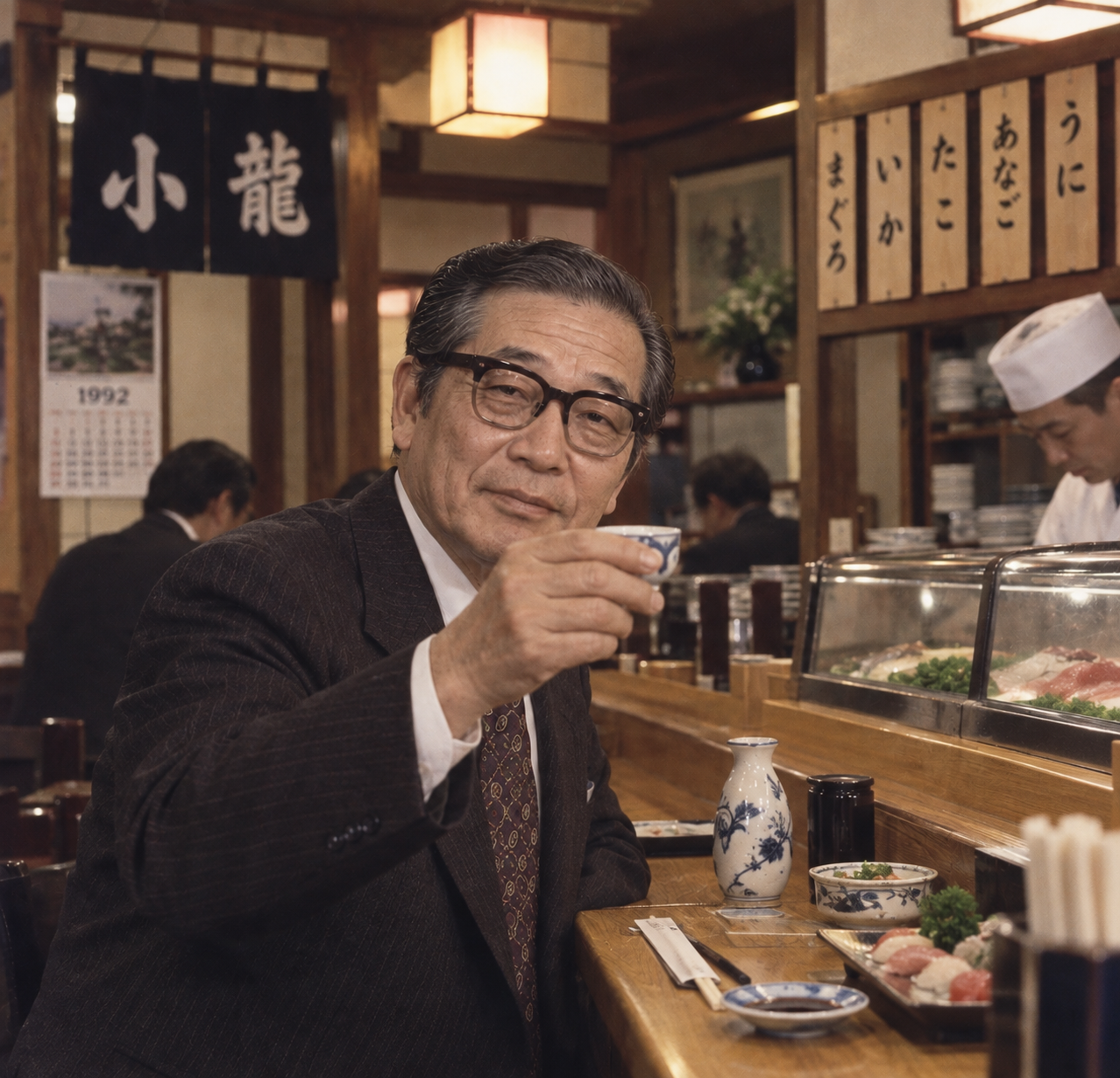
I would go a few times a week, sit quietly, drink a little sake, and have some sushi or sashimi. It became one of the highlights of my day. I often found myself chatting with people and that's where I first met an elderly gentleman named Mr. Tamaguchi, who would become very important to me, though I had no idea then. He was there most evenings as well, often on his own. We started talking. I think he wanted to practice his English. His English was actually pretty good. He seemed a little lonely. I never saw much sign of family, but he seemed to come from a well-to-do background. We talked over dinner and drinks, and those evenings stand out in my memory. That was how I first met Mr. Tamaguchi in Koryu restaurant, without the slightest idea of how important that chance meeting would become.
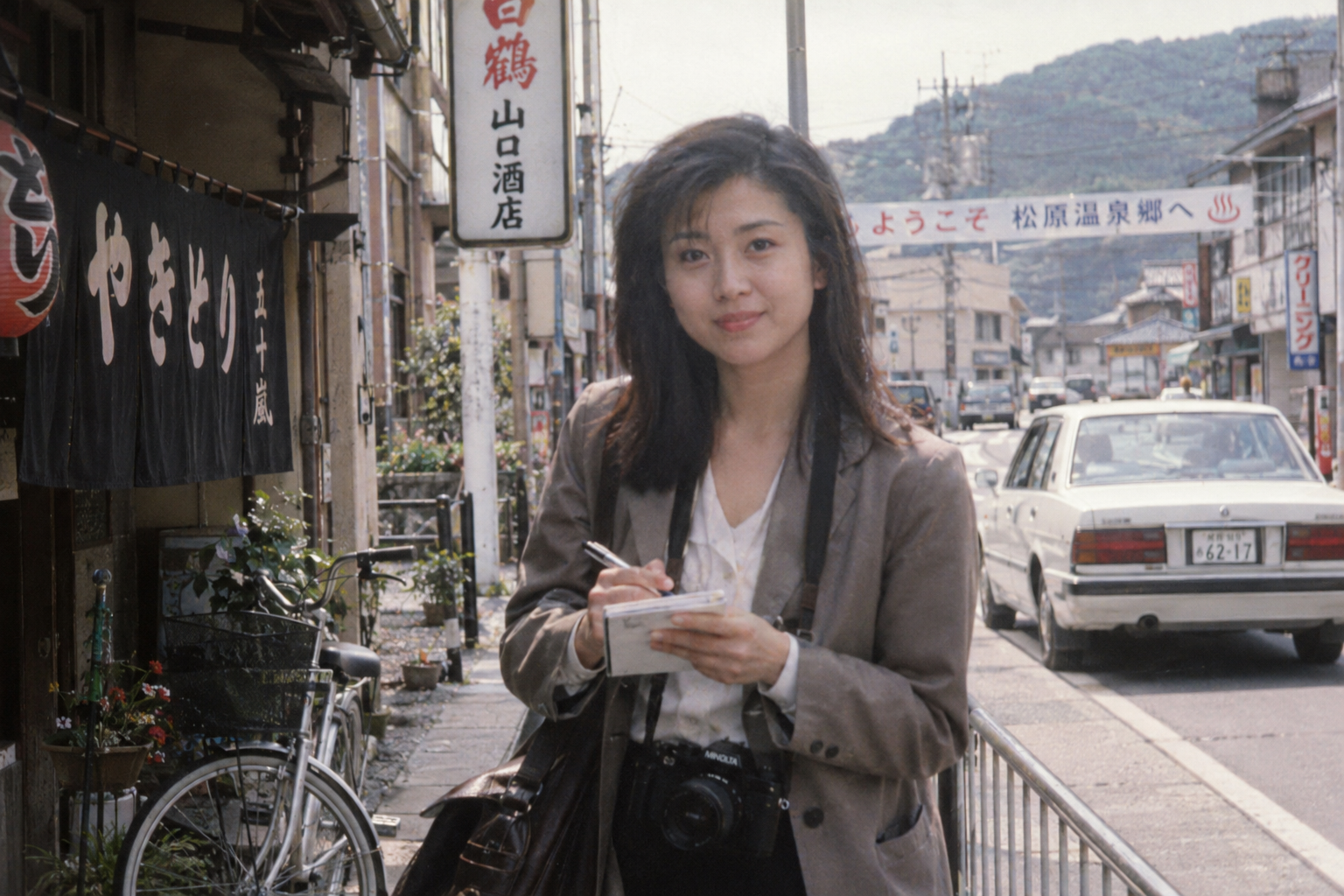
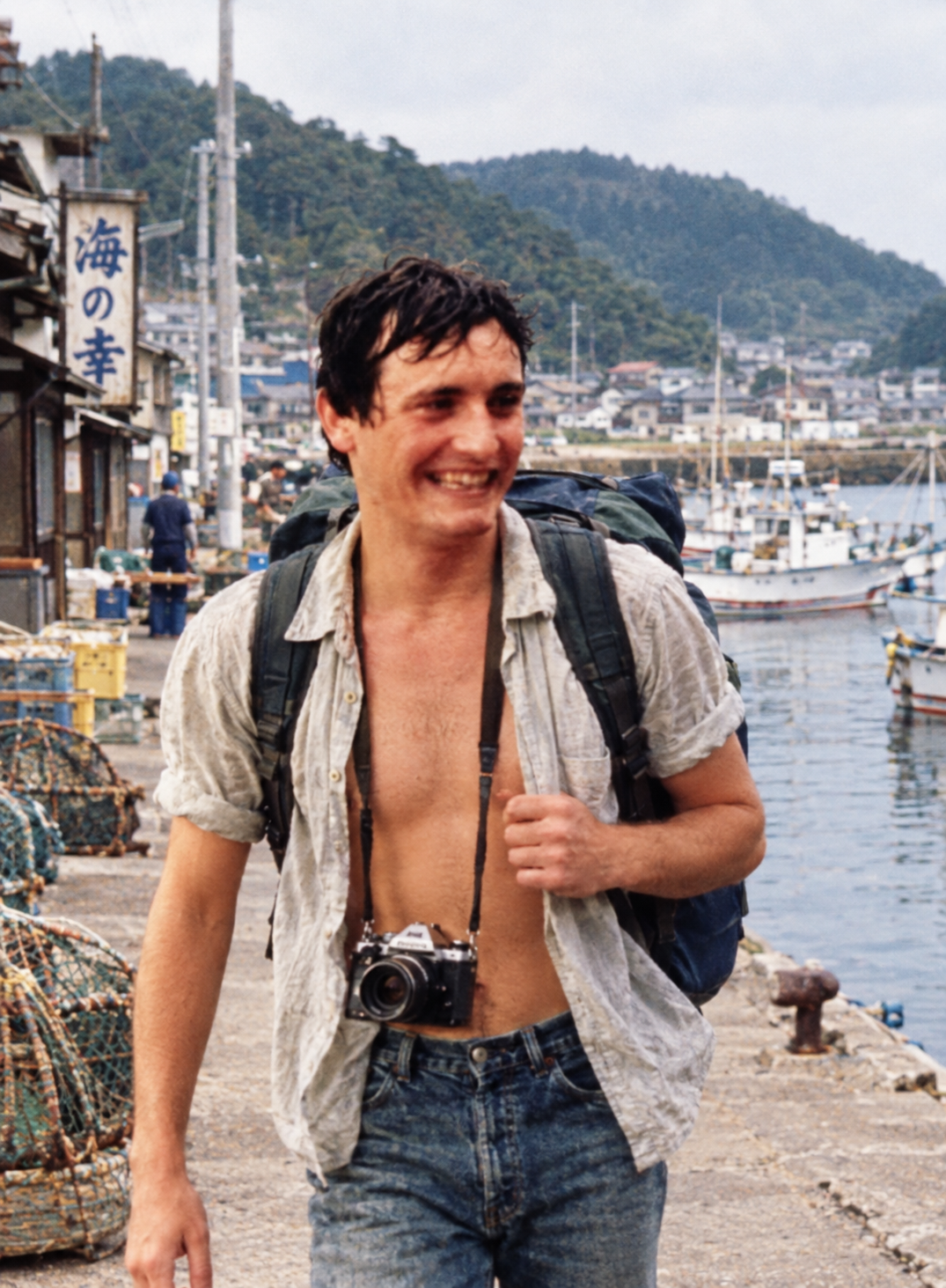
Owen Goodwin, Kuji, 1992
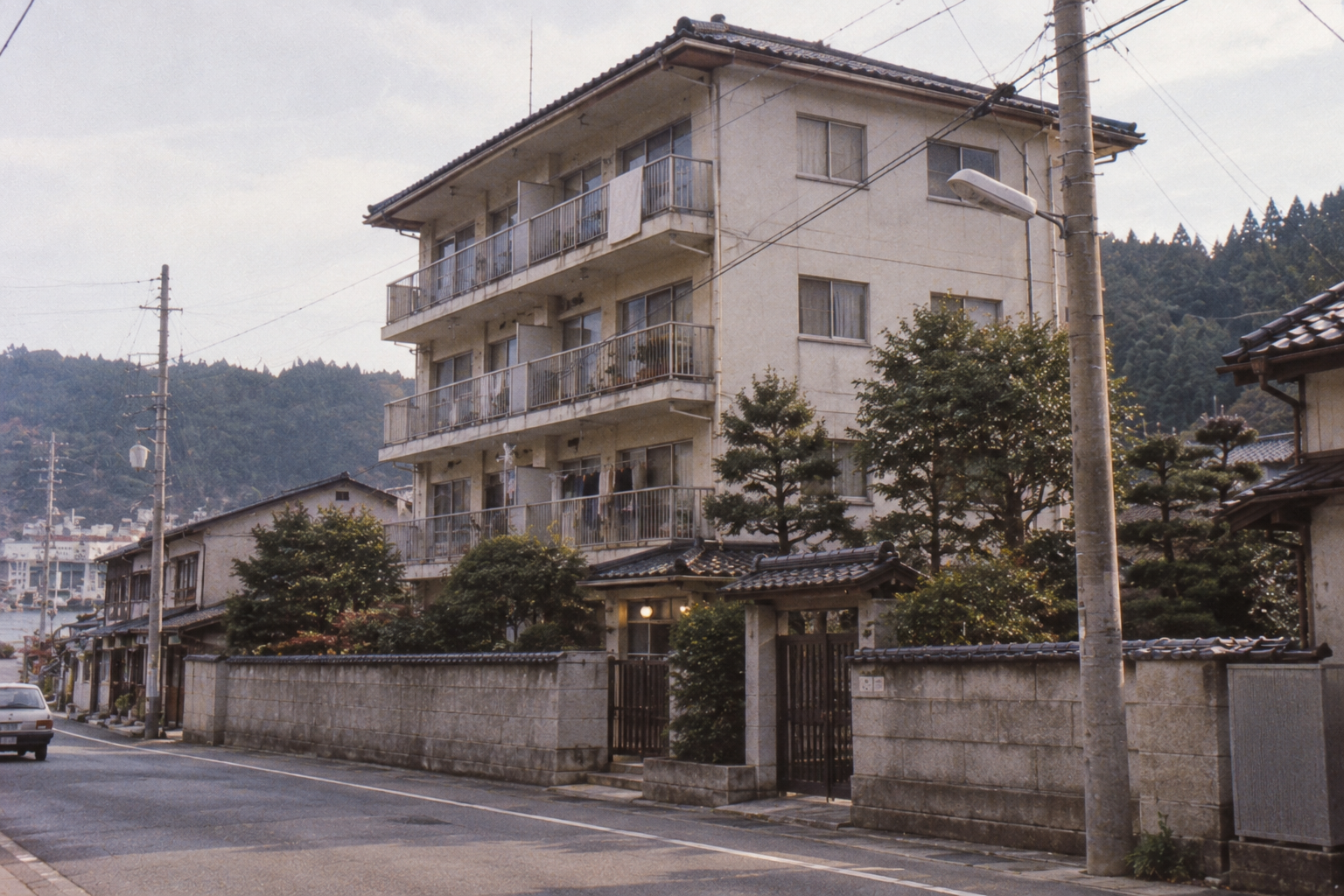
The apartment block, Kuji, 1992
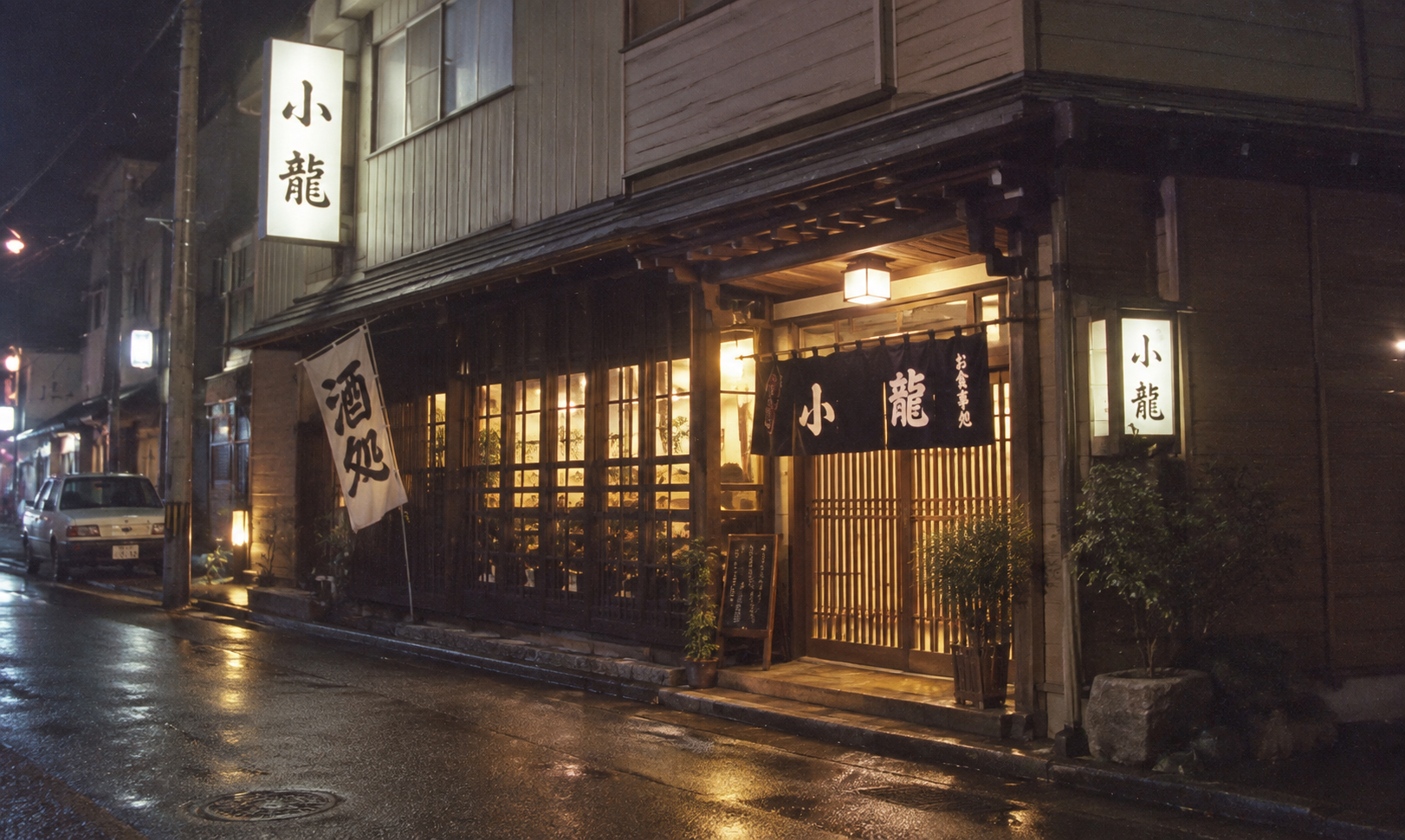
Koryu Restaurant, 1992
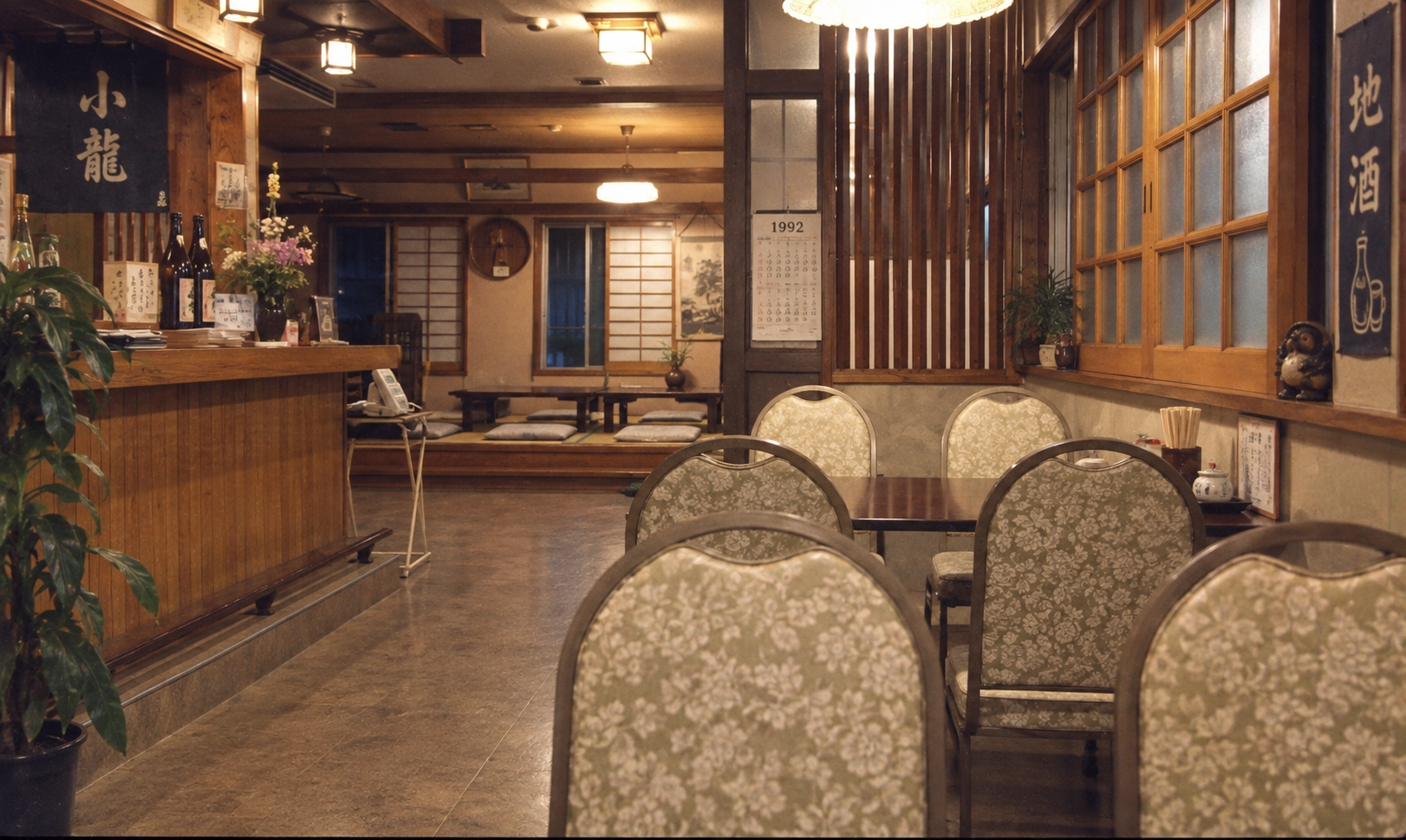
Koryu Restaurant, 1992
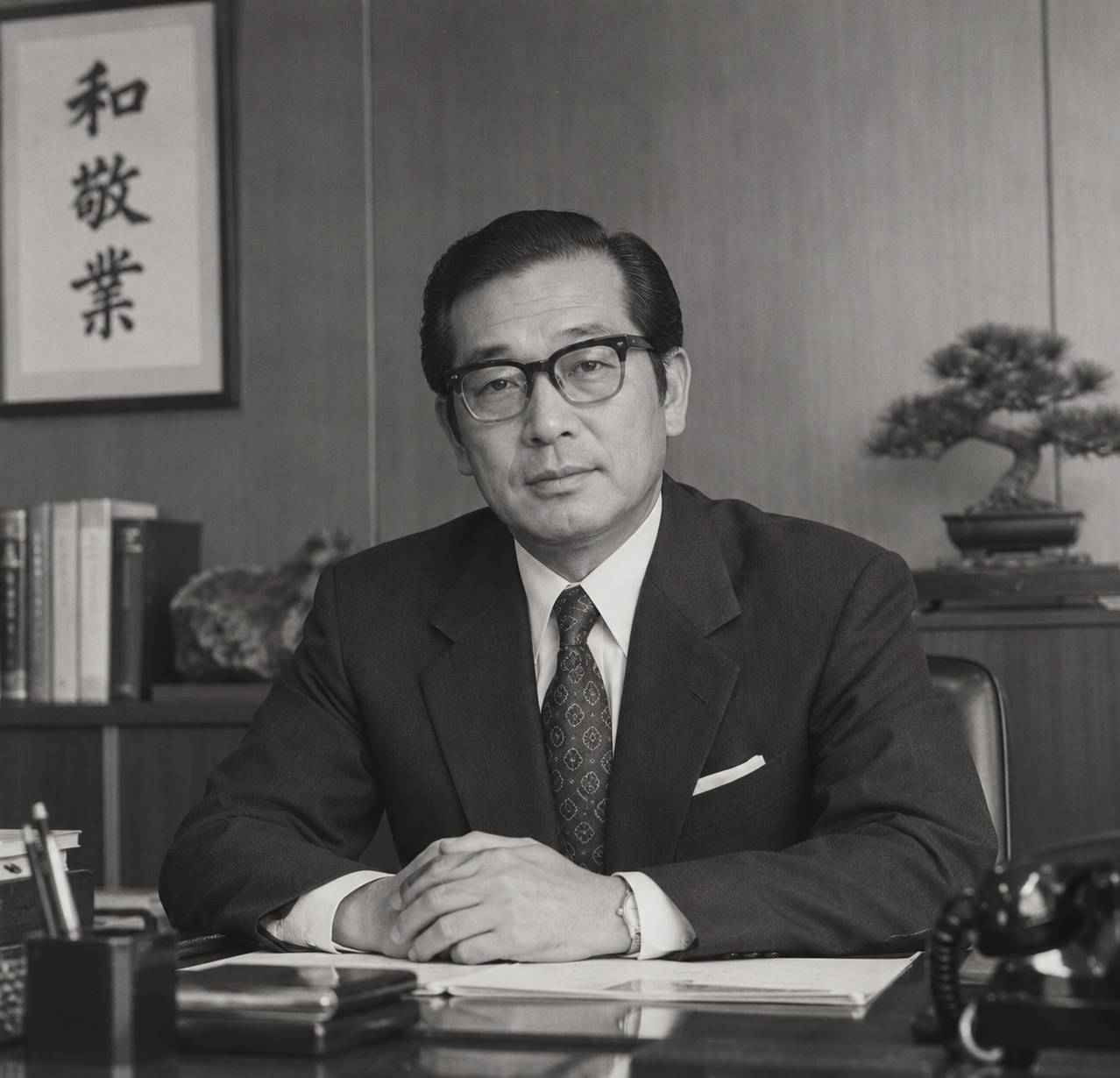
Mr. Tamaguchi, Tokyo, 1970
Mr. Tamaguchi in Koryu, 1992
A.N. It sounds as though Mr. Tamaguchi was becoming quite an important person in your life. Can you tell me a little more about him and about the friendship that developed?
O.G. Yeah, he did become a much more regular part of my life. In fact, he was undoubtedly my best friend at that time, even though I certainly never expected to become such good friends with a man in his 70s. I was still going to the Koryu Restaurant regularly, which I really enjoyed, and Mr. Tamaguchi was nearly always there. So seeing him became a stable part of life, something I looked forward to. After a while, he suggested I come to his house so we could continue with English lessons, and he could help me with my Japanese, which I was very happy with because I needed the extra teaching hours. He lived in this beautiful old three-story traditional Japanese house. Very elegant, the sort of place that made you think somebody important had lived there. There seemed to be a helper around the house, and sometimes people in the garden. But I never really understood the arrangement. He always let me in himself, and we'd sit at a large desk in what I assumed had once been his office. By then, it was just a comfortable space to sit and talk. There was usually a sake tray on the table. And between us, always, his bonsai. While we talked, he would constantly glance at it, snip something, make a tiny adjustment, and gradually he told me more about it, how important it was to him. I realized he loved that tree so much. He almost seemed to regard it as a child. So although we enjoyed our talks, the laughter, a few cups of sake, the bonsai was always there too, almost like another participant. That went on for, oh, a good six months, two or three afternoons a week. I'd go over, we'd sit and talk, and I learned a little about bonsai, but a lot about his life. He'd been a very successful businessman in Tokyo. His family was originally from Kuji, but they'd moved to Tokyo. He raised his children there and then retired back in Kuji, taking over the old family property. By then, he was the only member of his family still living in Kuji. His children had their own lives elsewhere. He talked about them quite a lot. I think he missed them, but he understood why they didn't want to come back to Kuji. He respected it. But I think there was some loneliness there too. I think he was genuinely happy to have someone to talk to and so was I. It was unlikely on paper but it became a very important bond for both of us.
A.N. You continued seeing Mr. Tamaguchi for several more months. When did you first realize that he was seriously ill?
O.G. He told me himself, quietly and very frankly. He said he was very sick and didn't think he had much longer, that he wanted time to sort out his things. It was incredibly sad, of course, but he was accepting of it. He'd had a long, successful life. Once he told me, I could see each time after that that he was declining quickly. One afternoon, as I was leaving, I had this feeling, like maybe that was the last time I'd see him. A couple of days later, someone from town called me to let me know that he'd passed away. Everyone in Kuji was talking about it. It was a big loss. He was well known and his family had been there for generations.
A.N. Did you feel part of that communal mourning?
O.G. Not really. I felt like an outsider. It wasn't unfriendly or hostile, but this was a family and town matter. I kept to myself for the most part. I still heard people talking and people knew I was close to him, but I wasn't sure where I fitted, and I just accepted it quietly.
A.N. What happened when Mr. Tamaguchi's family began arriving back in Kuji?
O.G. I started seeing new faces around town and I knew it must be Mr. Tamaguchi's family coming back for the funeral. I really didn't know how a Japanese funeral worked. I'd learned bits about the culture, but death is the last thing you tend to learn. No one was unfriendly. I just felt it wasn't my place, so I stayed on the outside of it.
A.N. When did that change?
O.G. I got a call from his son one day. He was very friendly, said the family was gathered and asked if I could come over. I was really nervous. I didn't know what to expect or how to act. I put on my best clothes and walked over.
A.N. What was it like when you arrived?
O.G. Everyone was incredibly nice. There were sons, daughters, grandkids, even some family from New York. Then his son took me aside and said his father specifically wanted me to take the bonsai. I was shocked. I asked if no one in the family could look after it. I didn't feel it was my place. But the son insisted that this was his father's wish. So, somewhat reluctantly, I agreed. And suddenly, I was walking back to my fourth floor apartment with Mr. Tamaguchi's bonsai. I set it by the window, opened a beer, and just looked at it. It was beautiful. And for the first time, I realized this tree was now a part of my life. A.N., what did you feel most strongly, the honor or the weight of it? O.G., both, but especially the responsibility, to Mr. Tamaguchi, to his family, to the tradition, and to the tree itself. I'd watched him treat it like a child, and suddenly that responsibility was mine. 24 hours earlier, I hadn't had anything like that. Now it felt like something important was depending on me. It felt heavy, a little bewildering, but not in a bad way. I wanted to take it on. Sitting there with that beer, I knew something had shifted, even if I didn't yet know where it would lead.
A. N., so there you were, living on the fourth floor with this bonsai that had meant so much to Mr. Tamaguchi. Did you even know how to look after it?
O. G., not really. I watered it the way I'd seen Mr. Tamaguchi do, checking the soil, being careful. The funeral passed, town life settled, and then about two weeks later, the local bank manager called. He asked me to come in and told me that Mr. Tamaguchi's son had transferred around eight thousand US dollars into my account. He said it was from Mr. Tamaguchi's will, to help me care for the tree. It was an enormous amount to me. I didn't know quite what to feel, but then I realized it gave me a chance to move. The ground floor flat in my building was empty. A bit more expensive, but it had access to a lovely walled garden, with grass, gravel, and stones. It felt right and the perfect way to use Mr. Tamaguchi’s money. I spoke to the landlord who knew my story and was more than happy to help me with my project. As soon as I moved downstairs, I carried the tree out into the garden & placed it on a rock in the very centre. When I stood back, it looked absolutely stunning. For the first time, I felt fully at ease with the responsibility.
A. N., so that garden changed things?
O. G., yes. It was the first time I felt that kind of permanence. A home, even a little one, for that tree, and for me! It was a definite step. Bigger steps would come later, but that was the first tree in what became my Kuji’s Bonsai Garden!
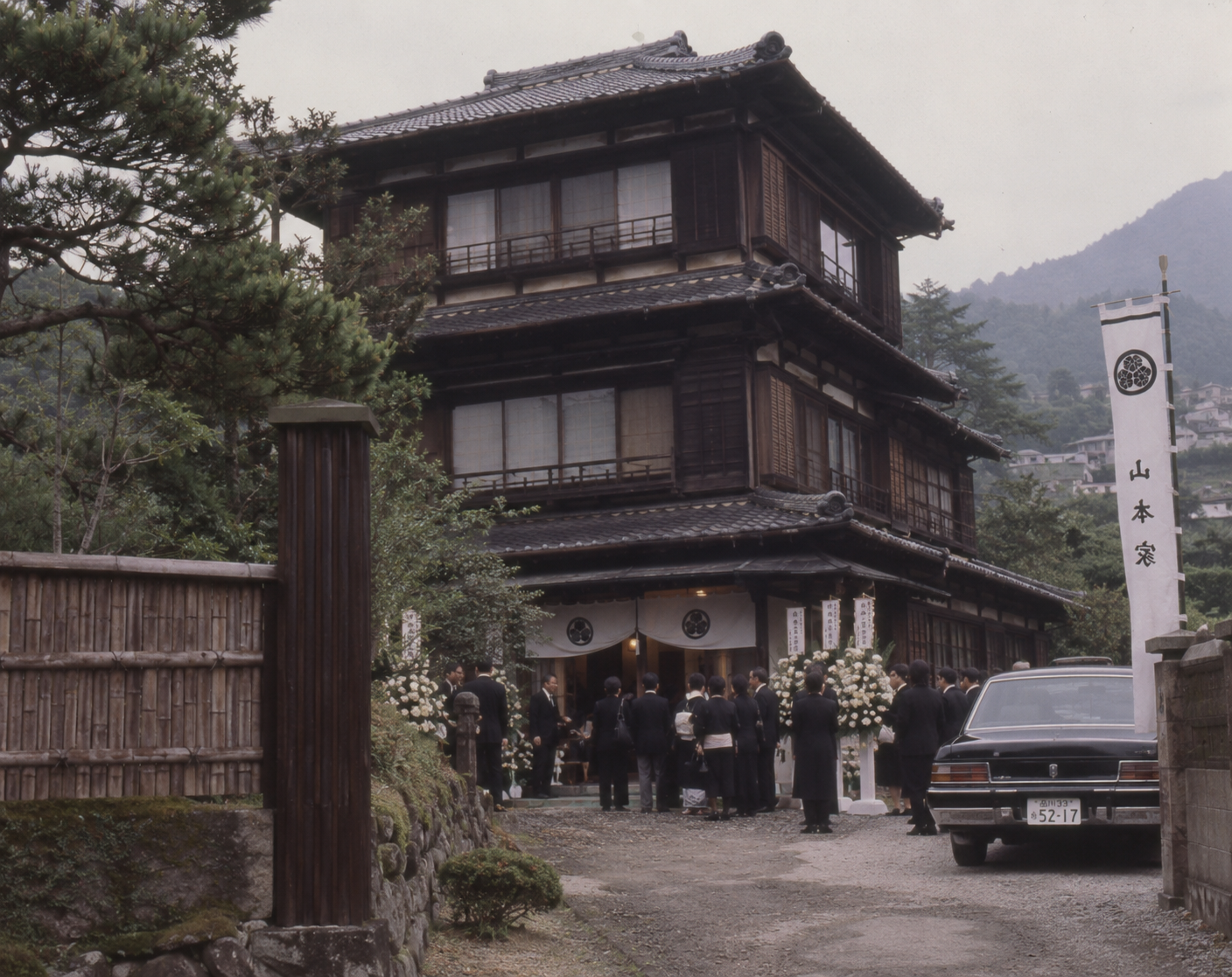
Tamaguchi family gather at ancestral home, 1992
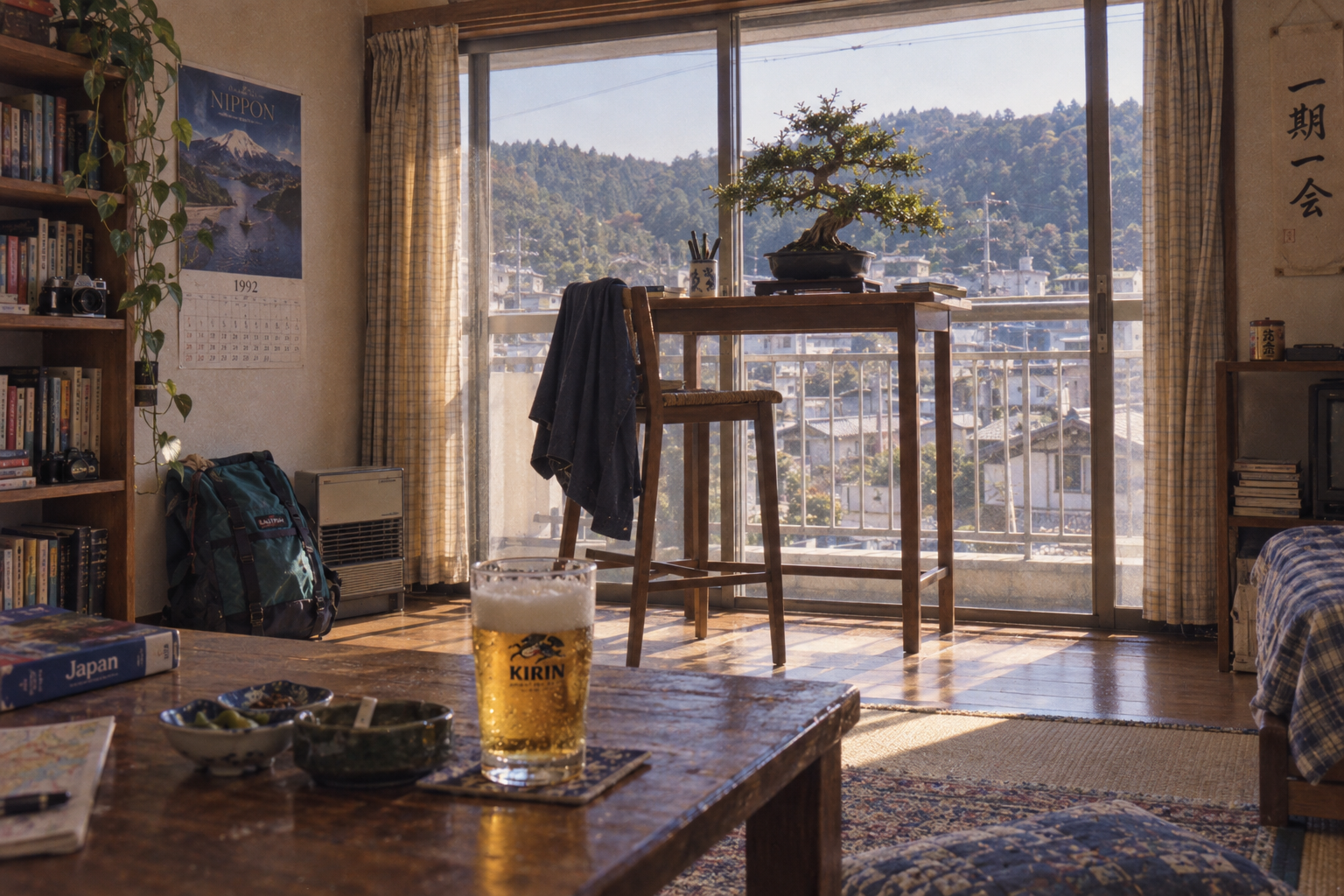
Mr. Tamaguchi’s Bonsai in Owen’s 4th-floor apartment
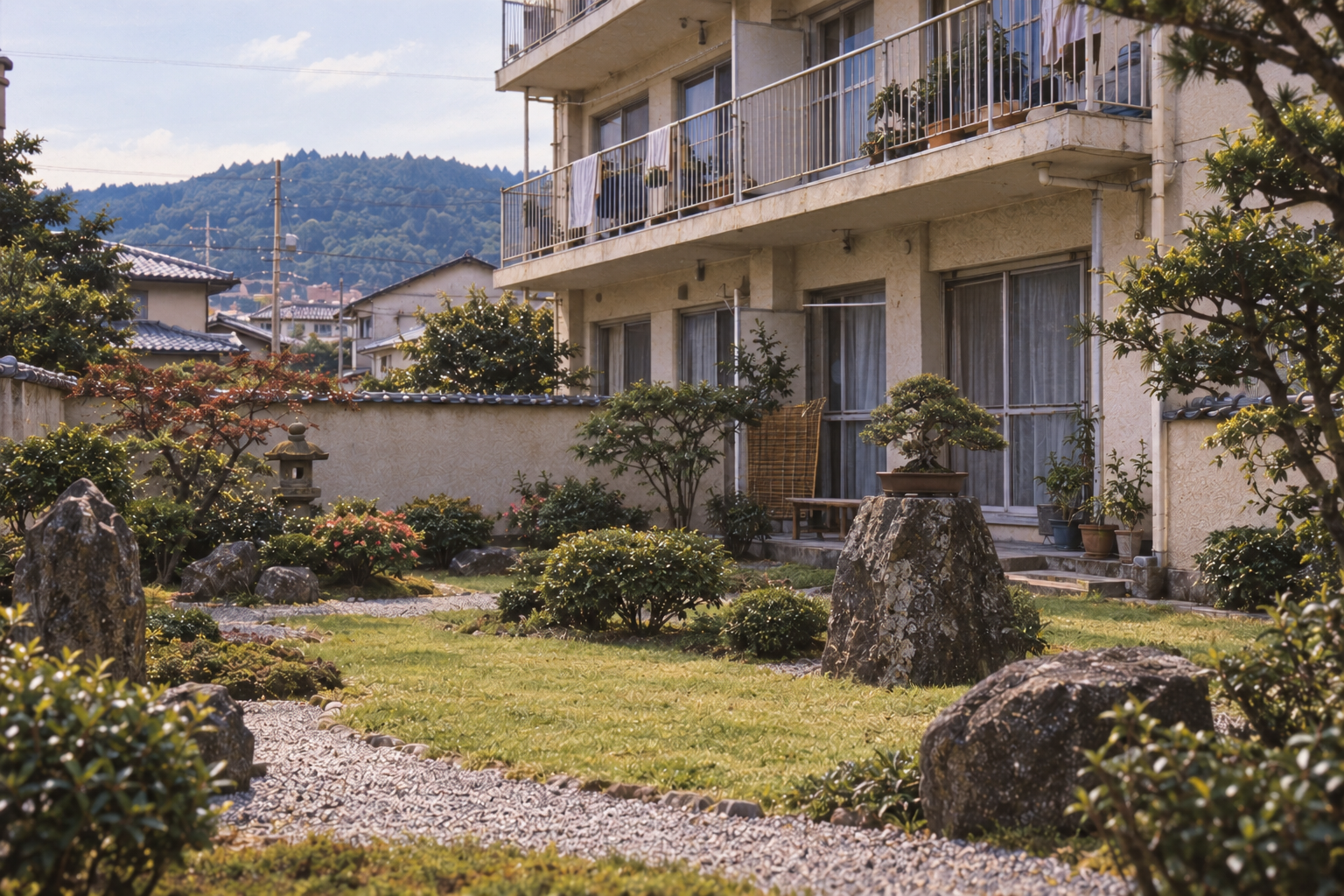
The first bonsai in the bonsai garden